


Roman Art
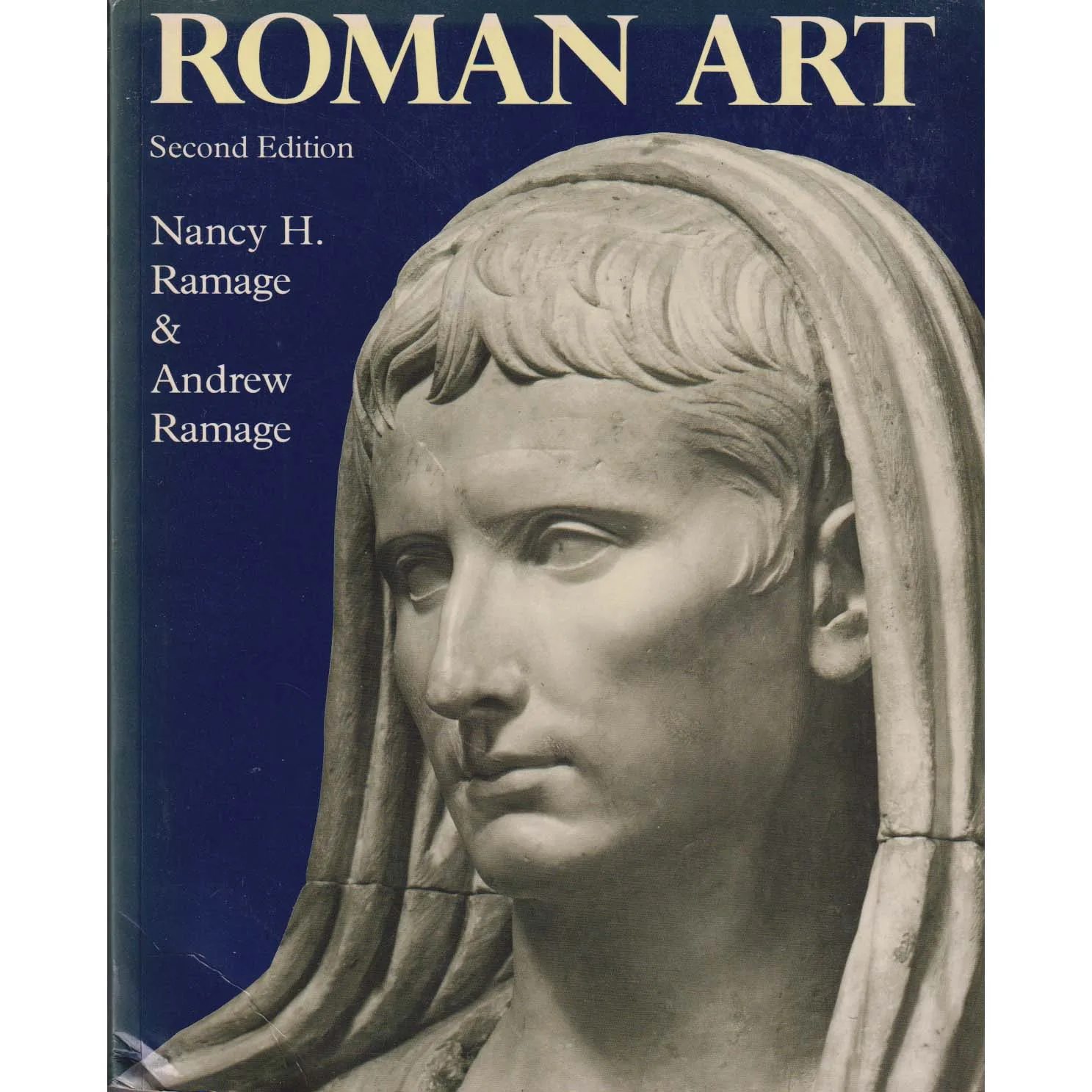
Publisher: Laurence King Publishing
Format: Paperback
ISBN: 9781856690782
Roman Art (1995) by Nancy H. Ramage and Andrew Ramage is the kind of book that makes you realise the Romans didn’t just conquer territories—they conquered aesthetics, then organised them into neat categories and labelled everything with admirable confidence. If you’ve ever looked at a marble head with a broken nose and thought, “Why does this feel oddly modern?”, this is your guided tour through two millennia of imperial taste, propaganda, plumbing-adjacent engineering, and extremely committed stonework.
This isn’t Rome as a vague mood-board of togas and columns. It’s Rome as a working visual machine: portraits that flatter the powerful while pretending to be “realistic,” reliefs that turn military logistics into cinematic spectacle, wall paintings that cheat architecture onto flat plaster with cheerful abandon, and mosaics that say “I am wealthy” one tessera at a time. The Ramages do the heavy lifting—sorting the emperors, the styles, the regions, the materials, the motives—so you can enjoy the main thrill of Roman art: it’s always art and a message. Even the decorative bits are busy doing politics.
And yes, you’ll meet the classics: the Augustan “we’re totally not a monarchy” look, the Flavian swagger, the Hadrianic cultured-bachelor energy, and the late imperial shift into the big-eyed, otherworldly stare that suggests everyone is a bit tired and the universe is complicated now. Along the way, you’ll get the satisfying realisation that the Romans were consummate borrowers. Greek sculpture? Lovely, we’ll have that. Egyptian obelisks? Perfect, pop them over there. Local gods and styles from the provinces? Absolutely, as long as they fit the brand guidelines of the empire.
As sold by Crappy Old Books, this copy is Condition: Good—which is frankly ideal for a title about antiquity. A bit of shelfwear only improves the vibe. It should look like it’s been consulted during late-night “wait, what is verism?” emergencies, carried to seminars, and left open on tables while someone gestures at a diagram like they’re planning a small, orderly invasion.
ISBN: (not listed here—mysteriously missing like the nose on a statue), but the content is very much present: a clear, structured, no-nonsense companion to the Romans’ greatest trick—making art that still feels loud, legible, and oddly familiar, even when it’s two thousand years old and missing an arm.
Recommended for: students, armchair classicists, museum wanderers, and anyone who wants to understand why Roman art is basically the original “public relations campaign,” executed in marble, paint, and occasional extremely enthusiastic mosaic fish.
Keep browsing: See more Art books Other books by Nancy H Ramage and Andrew Ramage
